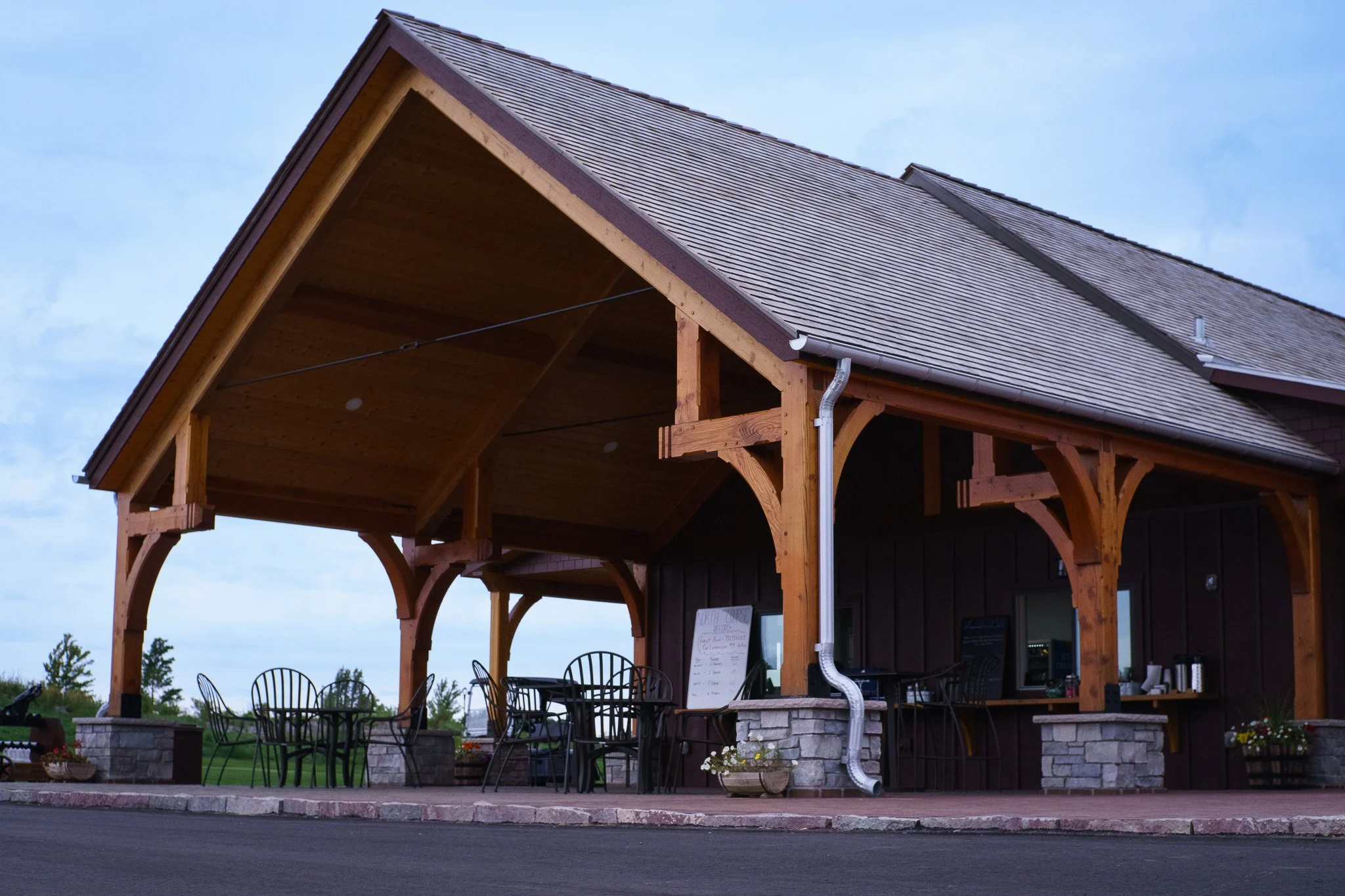
Timber Frame
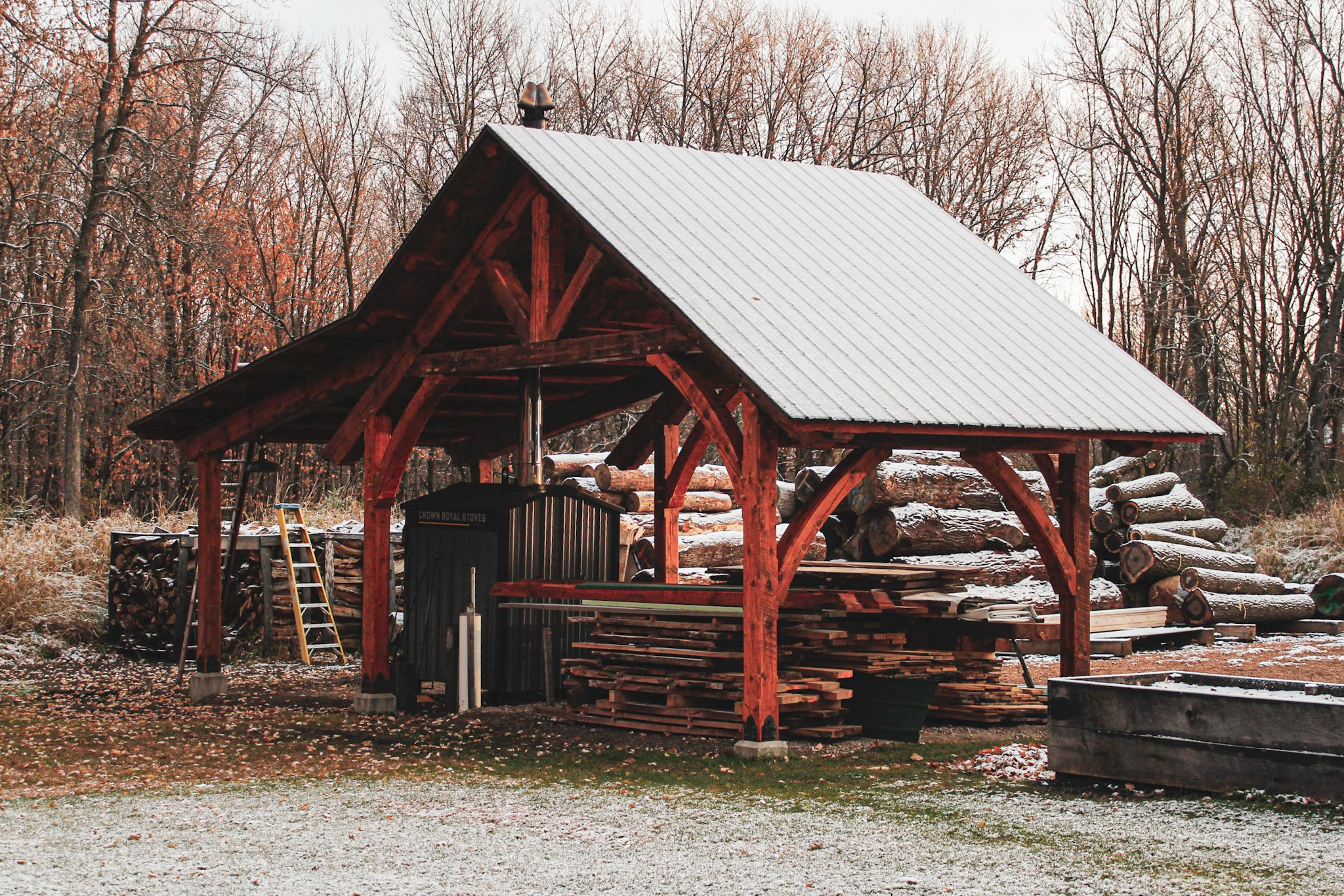
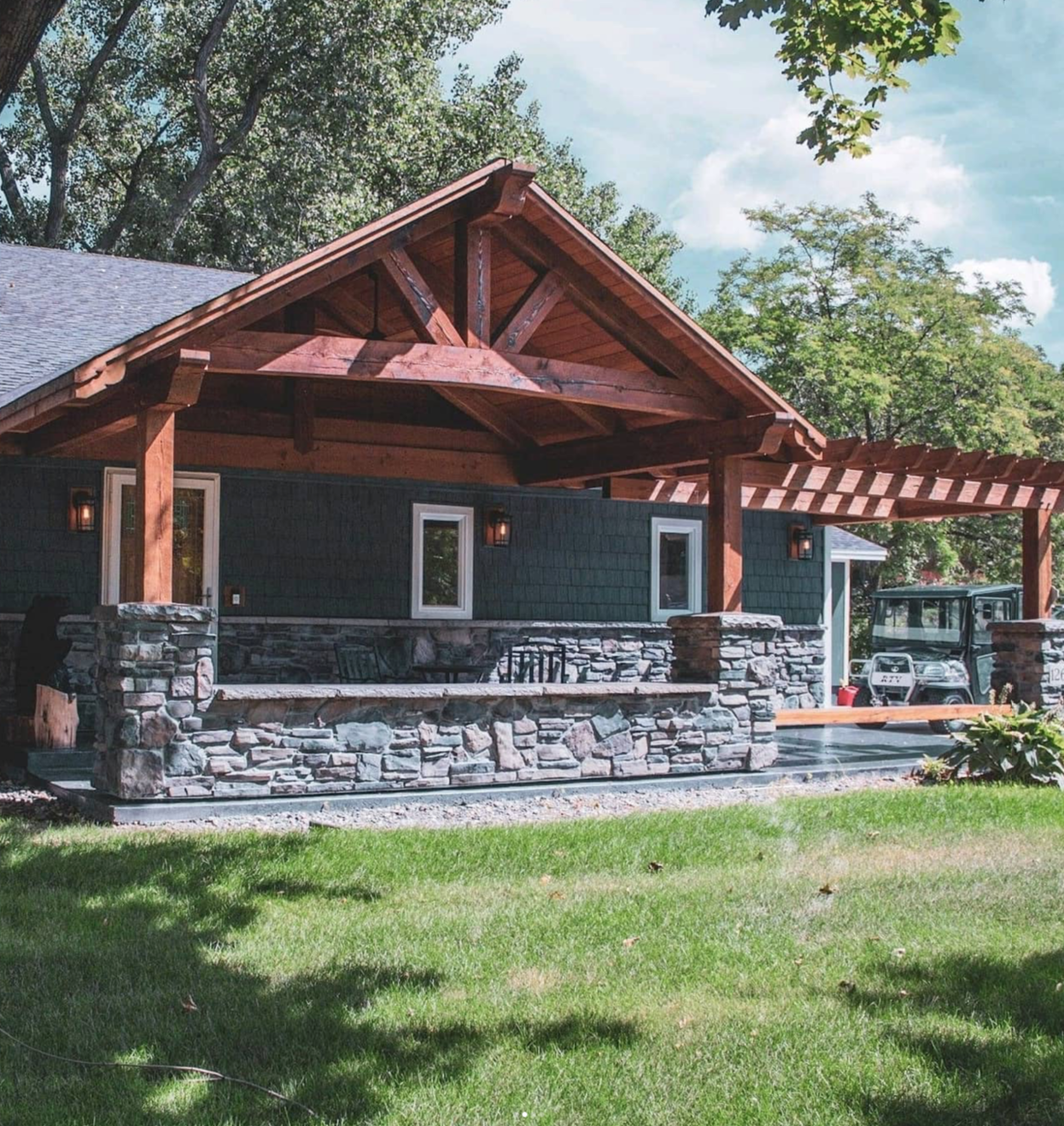
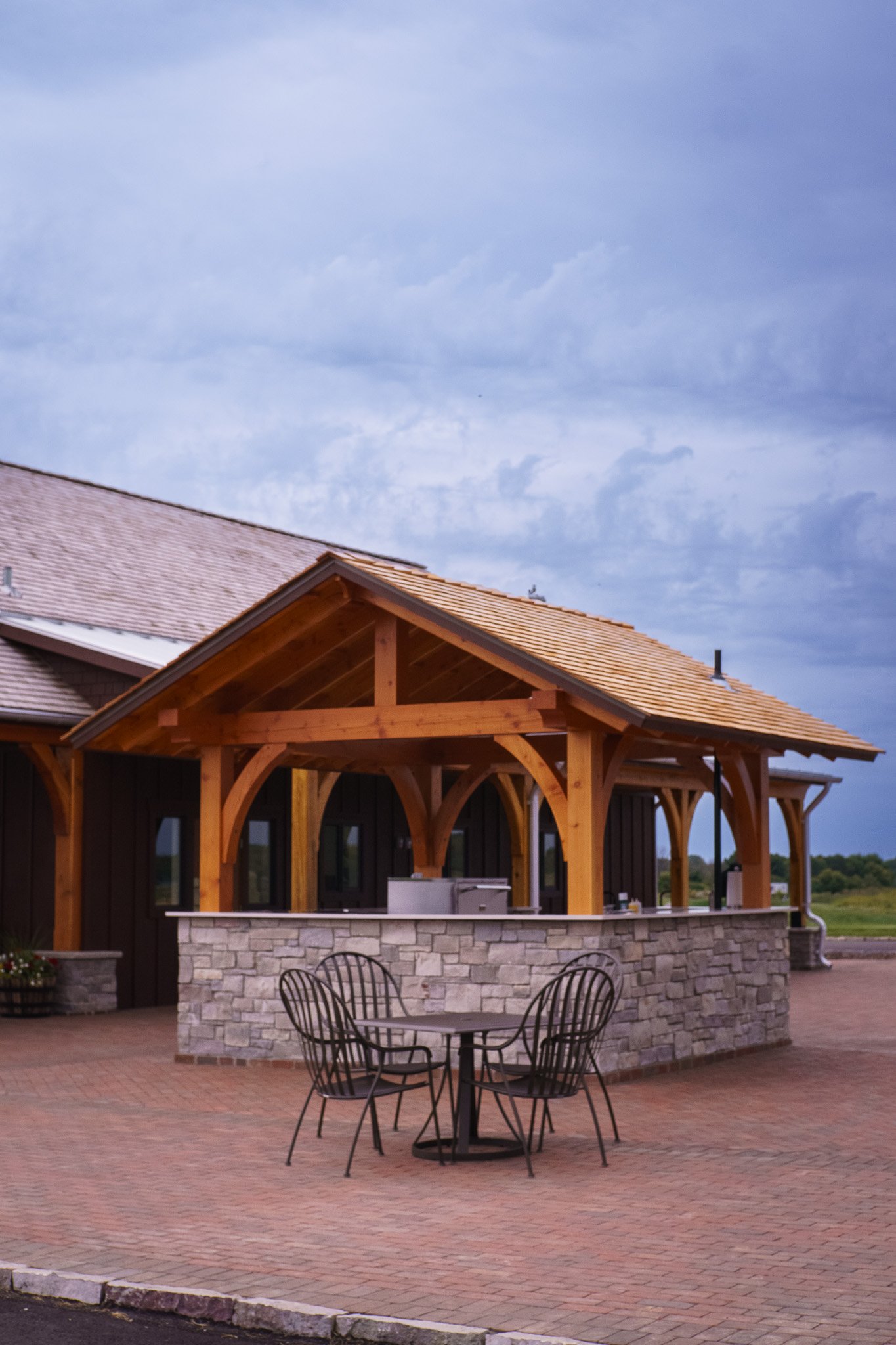
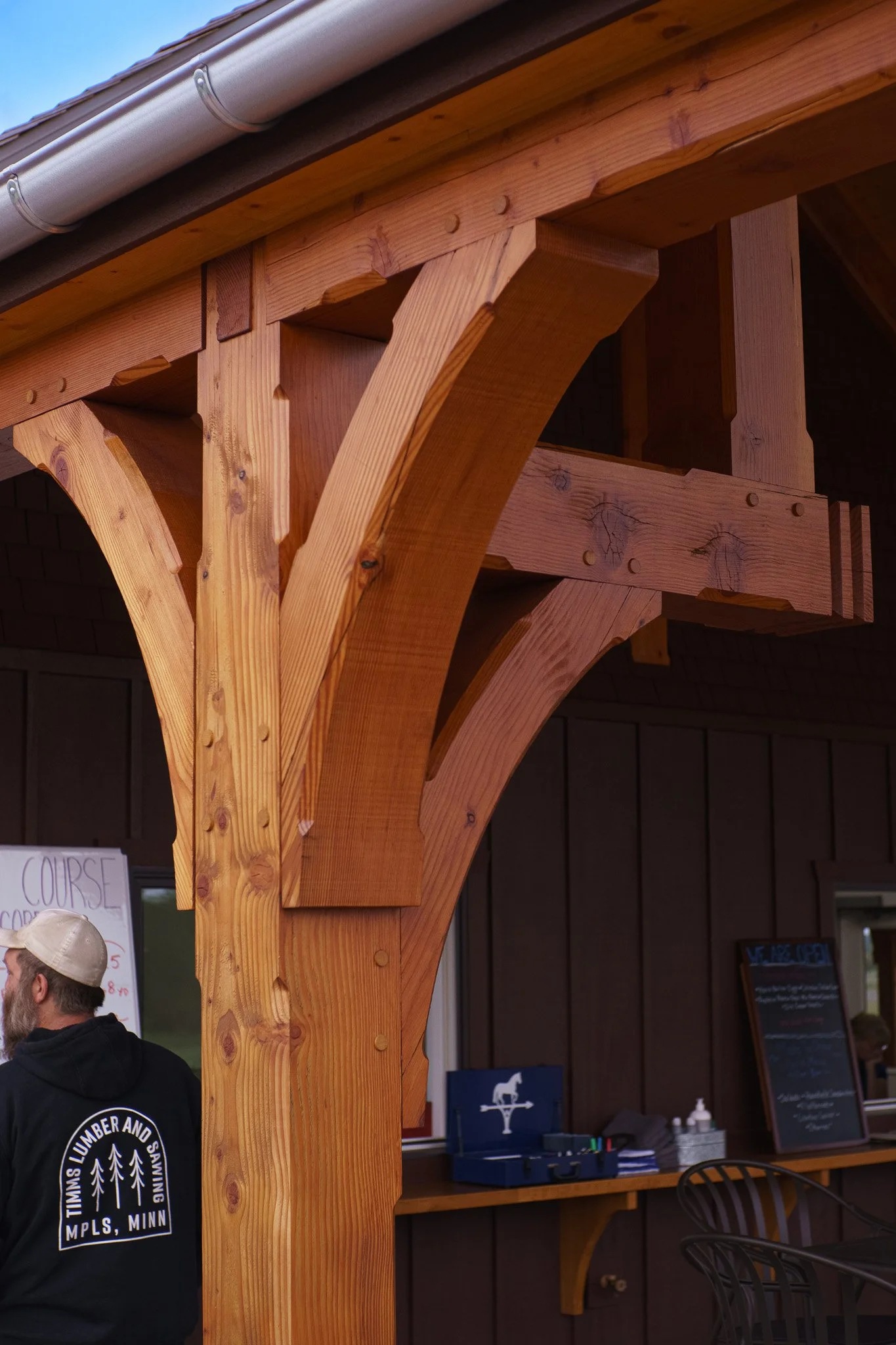
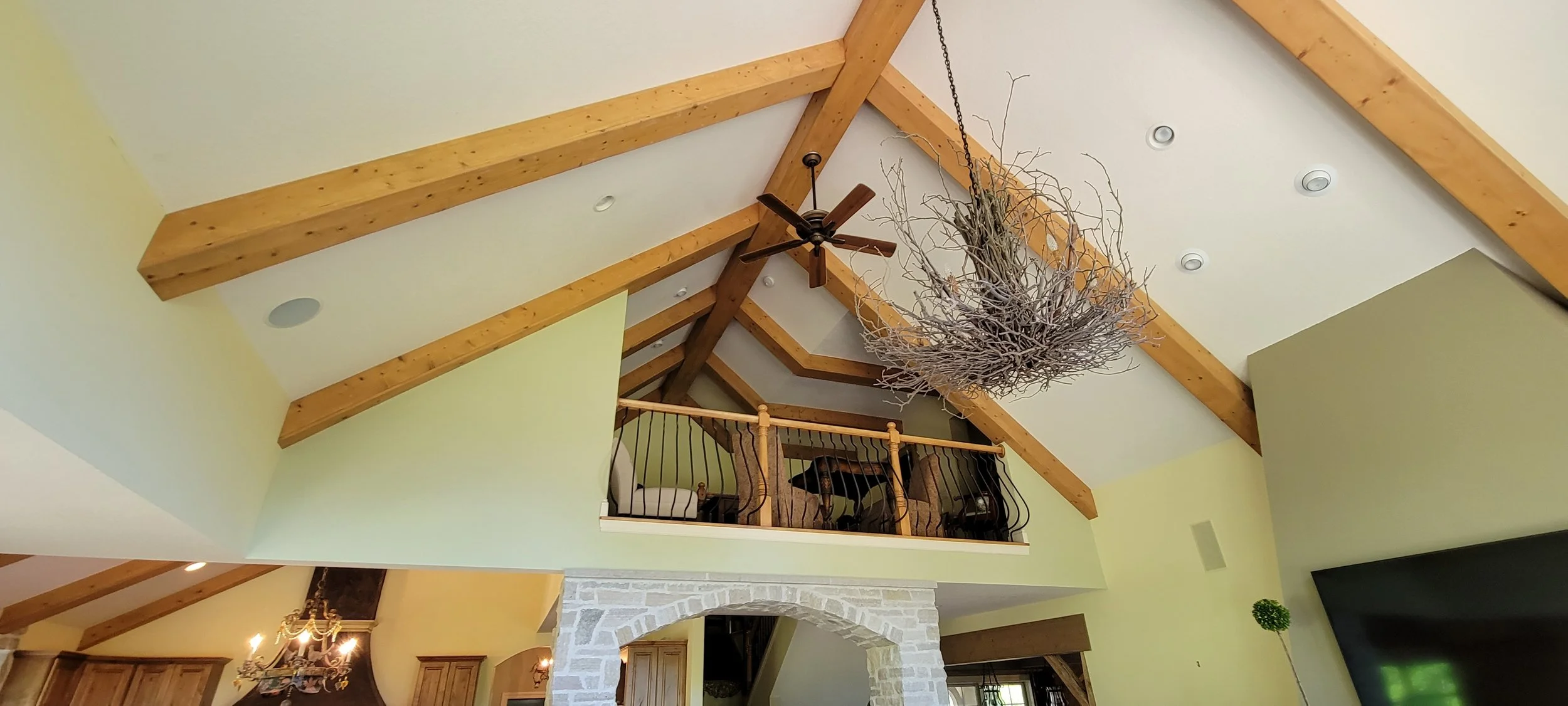
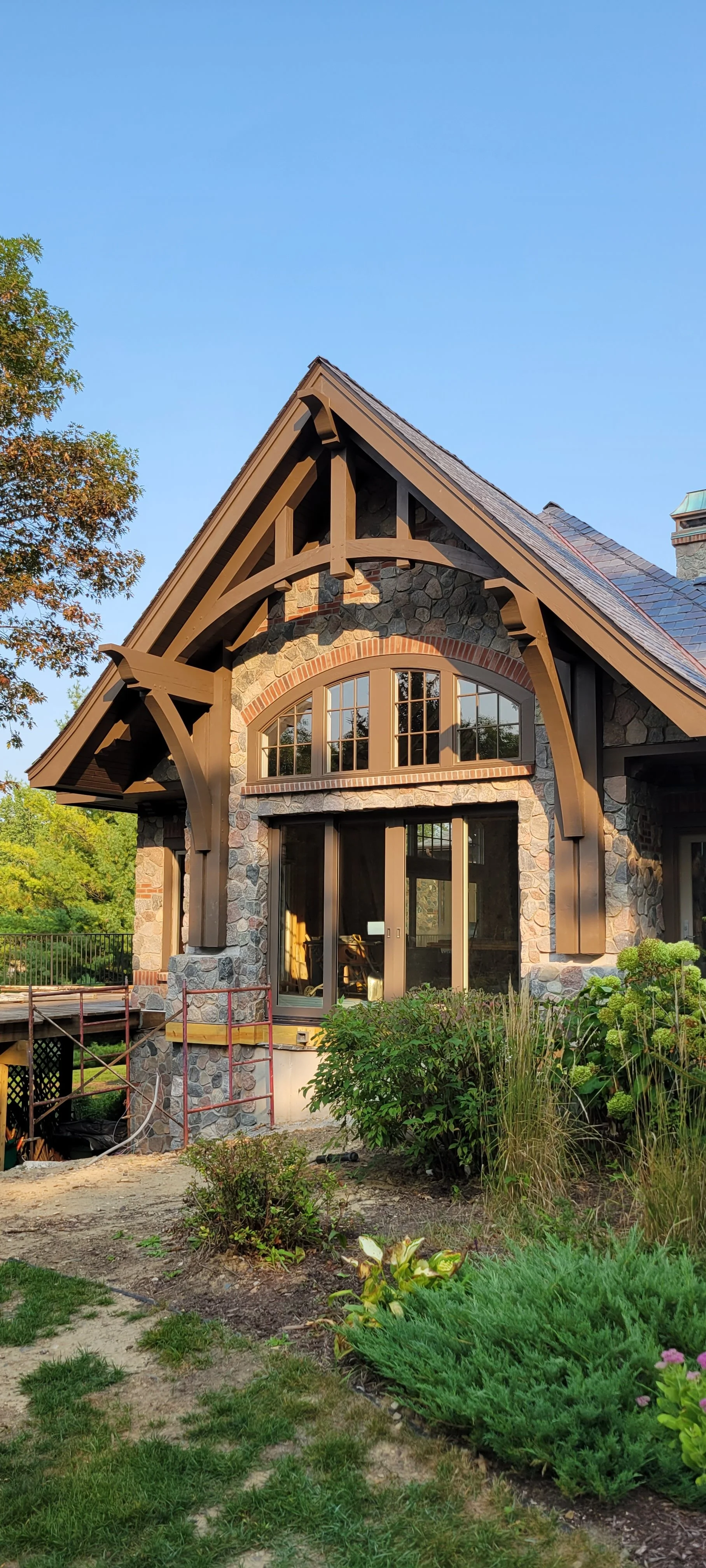
We have been building with timber frame for around 30 years including our parents home in 1997. The great thing about timber frame is the flexibility it offers when building with it. Your whole home can be created with timber frame or timbers can be used for an addition, a gazebo, a sign and much more.
We offer timber frame services including consultation, design, delivery, install and even just processing if you need your timbers to be planed or re-sawn. We are hired all over Minnesota to work on homes installing timber frames as well as creating one of a kind structures and signs. If you have questions about timber frame please fill out the form below and we will be in touch shortly!
Why we love it.
What is Timber Frame?
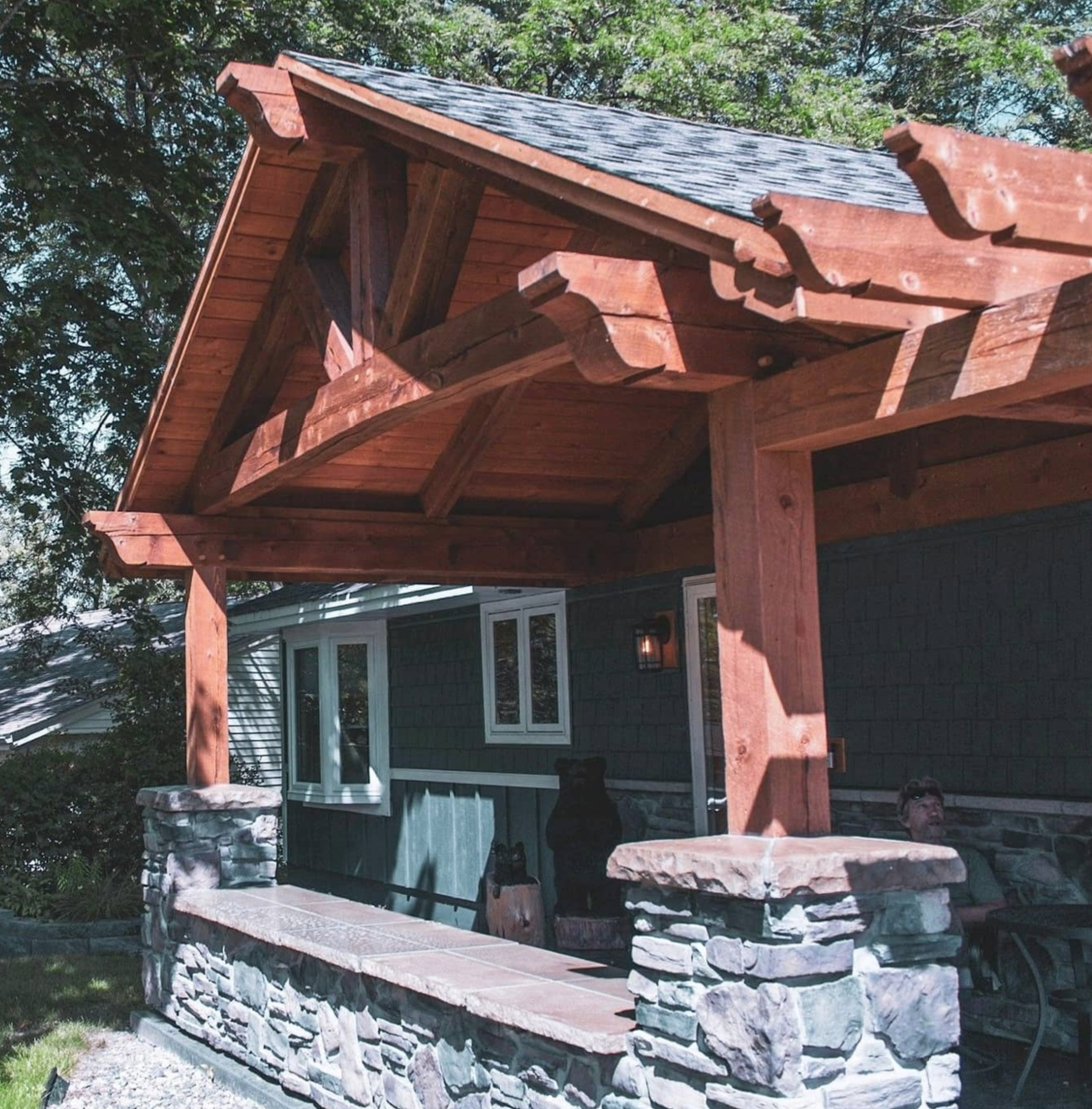
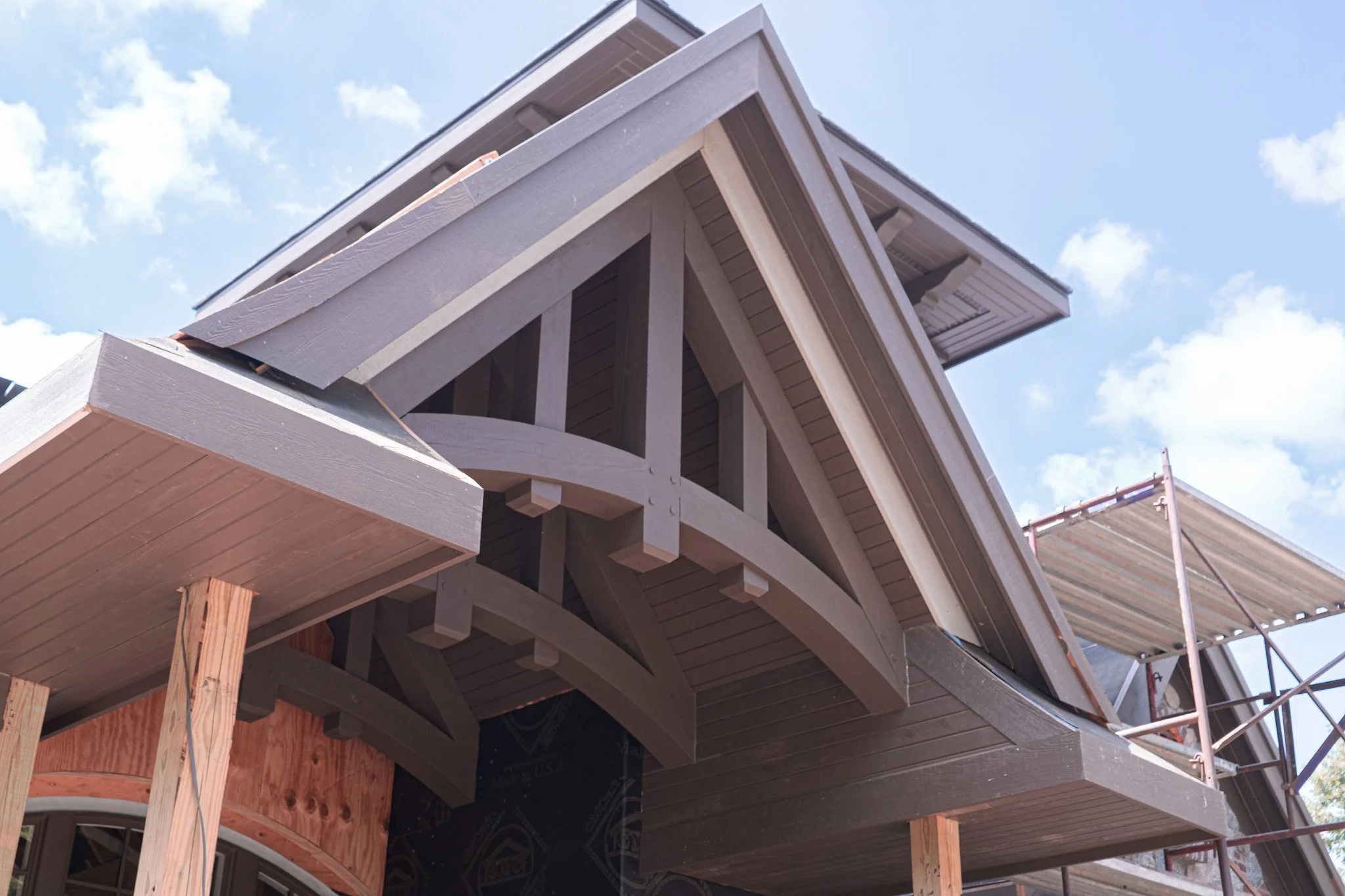
Timber framing is a traditional construction method that utilizes heavy, solid wood beams to create a self-supporting structural skeleton. Unlike modern homes that rely on nails and screws, these frames are held together by precision-cut mortise and tenon joints secured with hardwood pegs.
Because this exterior skeleton carries the entire weight of the building, it eliminates the need for interior load-bearing walls and allows for massive, open-concept living spaces. This durability is legendary, with many timber-framed structures standing for centuries due to the inherent strength of the large-scale wood. In modern applications, these frames are often wrapped in high-performance insulation panels to ensure the building is as energy-efficient as it is beautiful. The result is a unique blend of ancient craftsmanship and contemporary comfort that showcases the natural elegance of exposed wood.
FAQs
-
This is the number one question. Generally, a timber frame home costs about 10% to 20% more than a standard stick-built home for the structural shell.
-
No, Log homes are stacked horizontally to form the wall and require significantly more wood/timbers to create.
Timber Frame is formed with Large beams that act as a skeleton, and the walls are added to the outside of that skeleton, allowing you to use any exterior material you like (stone, siding, or brick).
-
Yes, and it’s completely normal! As large timbers dry out, they develop cracks called "checks." While they might look alarming to the uninitiated, they are almost never a structural issue. In the timber framing world, these cracks are considered part of the "character" and "soul" of the building
-
The choice usually comes down to three things: strength, look, and budget.
Douglas Fir: Very strong and stable; the "gold standard" for structural beams.
Oak: Incredibly hard and traditional, but very heavy and more expensive.
Eastern White Pine: A softer, more affordable option that is easy to work with and has a beautiful, light color.